What You'll Learn
- The 4-stage pyrolysis process that turns wood into carbon
- Why hardwood species matter for heat and flavor
- How to visually identify premium vs. low-quality lump
- Why Firebull uses no accelerants, binders, or fillers
Most people think of charcoal as a commodity — something you grab off a shelf without thinking about where it came from. But the process of turning hardwood into premium lump charcoal is a craft that directly affects how your food tastes. Here's what actually happens.
It Starts With the Wood
Premium lump charcoal starts with premium hardwood. Firebull uses a blend of oak, hickory, and mesquite — dense hardwoods with high carbon content that produce the most heat and the cleanest burn. Softwoods like pine are never used; they contain resins that produce acrid smoke and chemical off-flavors.
The Pyrolysis Process
Charcoal is made through a process called pyrolysis — heating wood in a low-oxygen environment until all the volatile compounds (water, sap, resins, gases) are driven off, leaving behind nearly pure carbon. This is done in large kilns or retorts at temperatures between 400°F and 700°F over 12–24 hours.
- Stage 1 (up to 300°F): Water and moisture evaporate from the wood
- Stage 2 (300–500°F): Volatile organic compounds burn off, wood begins to char
- Stage 3 (500–700°F): Remaining gases and tars are driven out, pure carbon structure forms
- Stage 4: Cooling in sealed environment to prevent combustion
Why Low Oxygen Matters
If you introduced full oxygen during pyrolysis, the wood would simply burn to ash. The low-oxygen environment is what allows the wood to transform into carbon without fully combusting. Think of it as controlled, incomplete burning — you're removing everything that isn't carbon while preserving the carbon structure of the original wood.
Pitmaster Tip
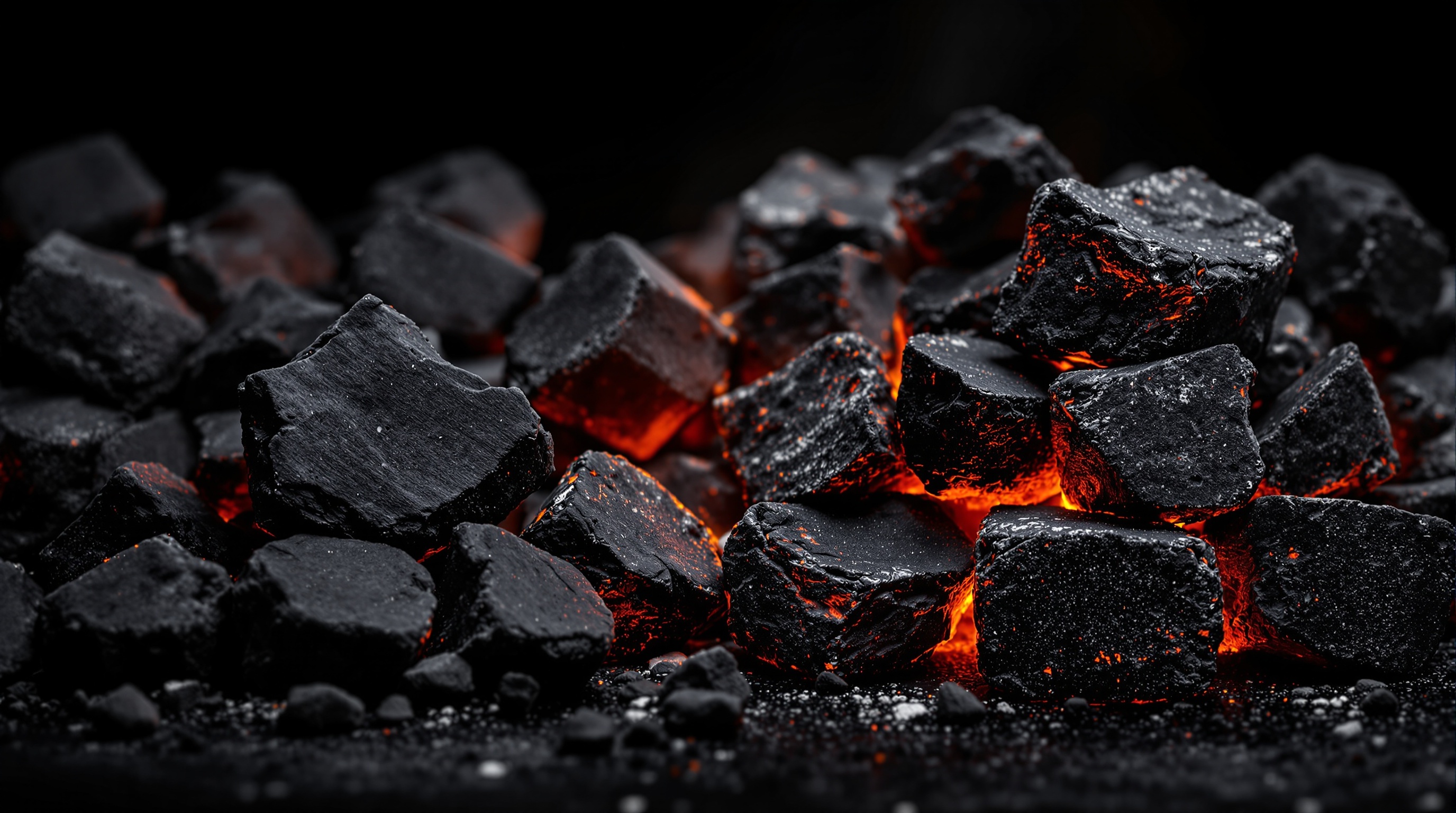
Pro Tip: You can actually see the quality of charcoal in its structure. Premium lump charcoal retains the grain and shape of the original wood. Cheap charcoal looks uniform and dense — a sign of lower-quality wood or over-processing.
What's Left After Pyrolysis
After pyrolysis, what remains is roughly 25–30% of the original wood weight — almost entirely carbon. This concentrated carbon is what makes lump charcoal so efficient. A pound of Firebull lump charcoal contains far more combustible energy than a pound of the original wood, because all the water and non-combustible material has been removed.
Why This Matters for Your Cook
The quality of the pyrolysis process directly affects your cooking experience. Properly made lump charcoal lights quickly, burns hot and clean, produces minimal ash, and imparts no off-flavors. Poorly made charcoal — rushed pyrolysis, wrong wood species, contaminated kilns — produces charcoal that's hard to light, burns inconsistently, and can make your food taste off.
| Quality Indicator | Premium Lump | Low-Quality Lump |
|---|---|---|
| Ignition time | 10–15 min | 20–30 min |
| Burn temp | 700°F+ | 400–500°F |
| Ash output | Very low | Moderate to high |
| Smoke quality | Clean, light | Heavy, acrid |
| Piece consistency | Varied, natural shapes | Dusty, crumbly |
| Flavor impact | Clean hardwood | Chemical or bitter |
Firebull's Process
Every bag of Firebull is made from sustainably sourced hardwood, processed in temperature-controlled kilns, and quality-checked before packaging. We don't use accelerants, binders, or fillers at any stage. What goes in the bag is exactly what comes out of the kiln: pure hardwood carbon, ready to burn.
Published by
The Firebull Team
April 28, 2026